


Technology has drastically transformed the world of music production, making it more accessible, efficient, and versatile. From the early days of analog recording to the rise of digital tools, technological advancements have reshaped how music is created, recorded, mixed, and distributed. In the modern era, musicians and producers have a vast array of tools at their disposal, including powerful software, hardware, and virtual instruments that allow for limitless creativity and experimentation. In this article, we’ll explore the crucial role that technology plays in modern music production, examining how it has influenced the process, the tools used, and the way music is experienced.
The Digital Audio Workstation (DAW): The Heart of Modern Music Production
At the core of modern music production lies the Digital Audio Workstation (DAW), which has replaced traditional analog tape as the primary tool for recording, editing, mixing, and mastering music. DAWs such as Ableton Live, FL Studio, Logic Pro X, and Pro Tools provide producers with everything they need to create professional-quality tracks, all in one software package.
These platforms allow users to record and manipulate both audio and MIDI (Musical Instrument Digital Interface) data. MIDI technology, which enables the communication between electronic instruments and software, is a key component in many modern genres, especially in electronic music and pop music production. The ability to edit and manipulate MIDI data with precision has given producers more control over every aspect of a track, including melodies, harmonies, rhythms, and even virtual instruments.
DAWs have also made collaboration easier, allowing artists from different parts of the world to share and work on music together, thanks to cloud-based platforms like Splice and SoundCloud. This level of connectivity and collaboration was nearly impossible just a few decades ago.
Software and Virtual Instruments: Expanding Creative Possibilities
One of the most significant contributions of technology to music production is the development of virtual instruments and software synthesizers. These software tools allow producers to access a vast array of sounds that would have been impossible to achieve with traditional hardware instruments alone. Today, producers can simulate everything from realistic piano sounds to experimental synths and orchestral arrangements using software-based tools.
Some of the most popular virtual instruments include Native Instruments Komplete, Spectrasonics Omnisphere, and Arturia V Collection. These plugins are packed with high-quality sounds that can replicate everything from classic analog synthesizers to real-world instruments like drums, guitars, and pianos. The ease with which a producer can access these tools has made it more efficient to experiment with different sounds and create more complex compositions in less time.
In addition to virtual instruments, software effects and audio processors like EQs, compressors, reverbs, and delays have revolutionized mixing and mastering. Producers can now process audio in real-time, with the flexibility to apply various effects and changes at any point in the production process. These plugins allow for more precise and creative manipulation of sounds, resulting in a higher level of polish in the final track.
The Role of Automation in Modern Production
Another key aspect of modern music production is the use of automation, which is the ability to program changes in sound over time. Automation allows producers to adjust parameters like volume, panning, effects, and filters dynamically throughout the track. For example, producers can automate the volume of a particular instrument to fade in and out at specific points in the song or modulate the frequency of a filter to create a sweeping sound effect.
This feature enhances the producer’s ability to control the energy and movement of a track, adding depth and variation. Without automation, many of the nuanced, evolving sounds in today’s music would be nearly impossible to create.
Sampling and Sound Libraries: The Democratization of Music Production
In the past, musicians and producers had to record their own sounds or hire session musicians to play various parts for their tracks. However, with the advent of sampling technology, this process has changed drastically. Sampling involves taking a portion of a pre-existing recording, whether it’s a drum beat, a vocal line, or a melody, and reusing it in a new composition.
With the availability of vast sound libraries and sample packs, producers now have access to thousands of pre-recorded sounds that they can incorporate into their tracks. Drum loops, vocal samples, and instrumental clips from various genres and cultures are easily accessible, allowing producers to create rich, diverse music with just a few clicks. Websites like Splice, Loopmasters, and ProducerSpot provide extensive libraries of royalty-free samples, enabling producers to explore different sounds and genres.
Sampling has played a significant role in the development of genres such as hip hop, electronic music, and trap. Iconic producers like Kanye West, Dr. Dre, and Timbaland have built their careers around innovative sampling techniques that blend various musical styles into fresh, new sounds. Technology has made it easier for producers to experiment with these sounds, providing endless possibilities for creativity and expression.
The Influence of AI and Machine Learning on Music Production
In recent years, the integration of artificial intelligence (AI) and machine learning into music production tools has begun to reshape the industry. AI-powered software can now analyze music and make suggestions for chord progressions, melodies, and even vocal arrangements. For example, Amper Music and Aiva are AI-driven platforms that allow creators to generate royalty-free music with the help of algorithms that understand musical theory.
Moreover, machine learning algorithms are being used in audio mastering software, such as Landr and eMastered, to automatically adjust levels, EQ, and dynamic range for a professional finish. These AI tools can save producers time by streamlining tasks that would have traditionally required human expertise, making it easier for artists to focus on their creativity.
Hardware Innovations: High-Quality Gear for the Home Studio
While software tools play a dominant role in modern music production, hardware innovations also contribute significantly to the process. High-quality audio interfaces, microphones, and studio monitors are essential for achieving professional sound in a home studio.
In recent years, the accessibility of affordable recording equipment has allowed aspiring producers to set up professional-sounding studios at home. Audio interfaces like the Focusrite Scarlett series and Behringer UMC provide excellent audio quality for a relatively low price. Studio monitors like the Yamaha HS5 and KRK Rokit ensure that producers can hear their mixes with accuracy, allowing for better decision-making when it comes to mixing and mastering.
Innovations in virtual instruments and controller hardware like the Akai MPK Mini and Native Instruments Komplete Kontrol have also made it easier for producers to control their DAWs and sound libraries. These compact, versatile devices help bridge the gap between software and the tactile experience of playing real instruments.
The Future of Technology in Music Production
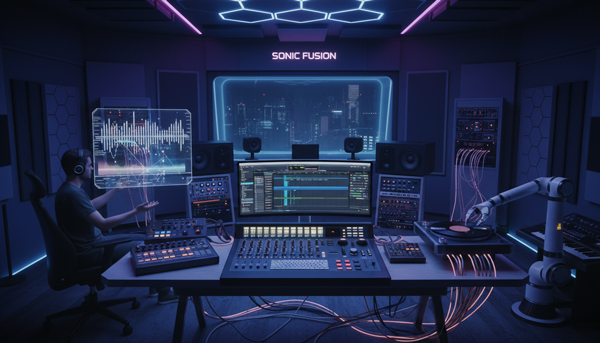
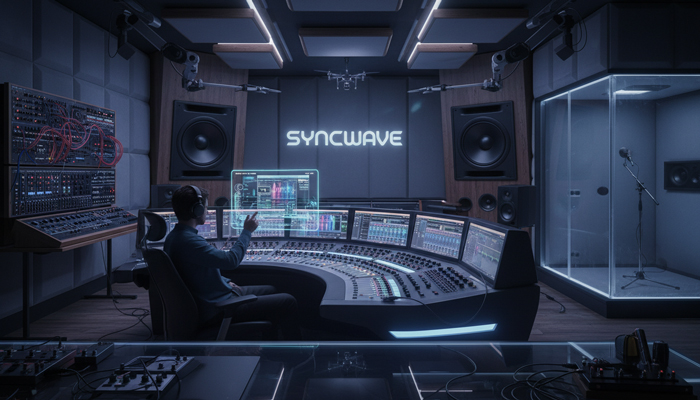
The future of music production is bound to be shaped by continuous advances in technology. With AI, machine learning, and even virtual reality (VR) becoming more integrated into music production software and hardware, the creative possibilities are virtually limitless. VR and augmented reality (AR) may soon allow producers to interact with music in entirely new ways, such as manipulating sound with hand gestures or exploring 3D soundscapes.
Moreover, blockchain technology is being explored as a way to revolutionize the music industry, providing better transparency in royalty payments and protecting intellectual property. As technology continues to evolve, music production will become even more accessible, collaborative, and innovative.
Technology has completely transformed modern music production, providing artists and producers with an unprecedented array of tools to express their creativity. From powerful DAWs and virtual instruments to the rise of AI and sampling, technology has made it easier than ever to produce professional-quality music from anywhere in the world. As we move forward, the integration of new technologies will continue to shape the way music is made, heard, and experienced. For musicians and producers, the future of music production is filled with exciting possibilities.
Exploring the Role of Technology in Modern Music Production
20
