

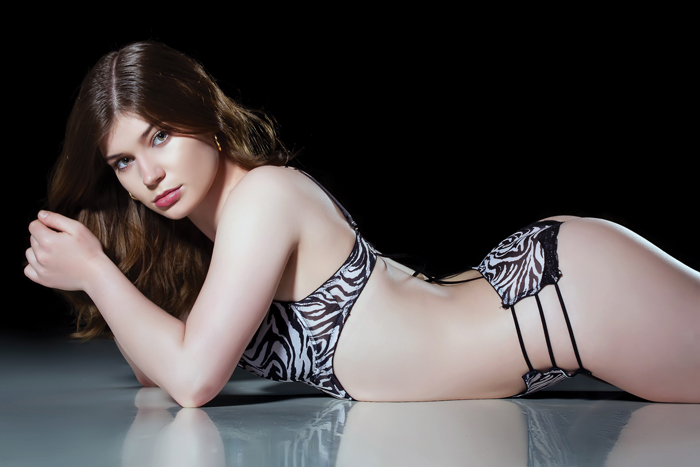

Written by Rick Trottier – RJT Images/Light Works Studio
In the Beginning there was Studio Lighting, and it was Good. We moved the lights in arrays that tended to create cleanly lit but somewhat flat illumination, and it was enough. But as time passed, the desire to create imagery that had a deeper, more complicated and more evocative look grew and new lighting schemes were authored. Such efforts required faith and experimentation, but reward was found and All was Better. And time passed again, leaving its mark on the mind and soul, pushing the heart to find newer and better ways to light subjects creatively. It was determined that greater sacrifices and innovation were needed so that Beauty could be Best Served. Trials and Tribulations using Diffusion techniques and methods of Bouncing Light off any and all surfaces were entertained and the end product was Wonderful. Since those Days of Trial, there is no longer any Fear of Invention and “Playing with Light” has brought Great Joy in The Studio.
In all seriousness, despite my delight in reveling in classical language and playing with archaic prose, there comes a time in every photographer’s artistic journey that the old ways just aren’t soothe anymore and new ways must be embraced. But how to experiment? There are only so many angles at which lighting can be set, only so many power levels to work with and only so many different settings on a camera. While these variables do create an immense range of permutations, they all devolve to the same place. The basic platform for lighting doesn’t really change and all you are doing is really tinkering with engineering and not truly innovating. For those who need to make a hard left turn in their lighting schemes and burst out of the box, lest it become a bond by which you are constrained, allow me to suggest two alternatives of the many possible ways to make the process of devising light schemes fun again; diffusing light and bouncing it off surfaces.
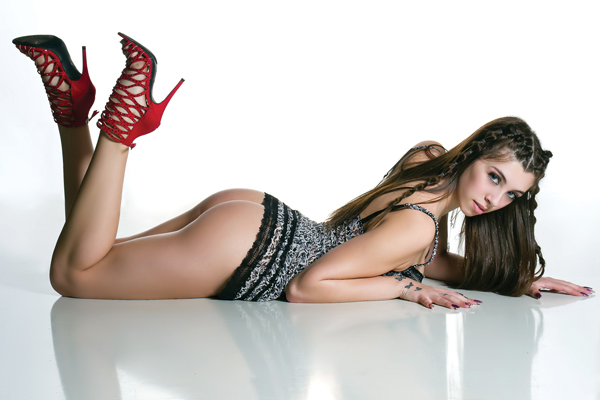
Diffusing Light – The entire concept here is one of forcing light through some type of material so that in the process, that light is softened and redirected. As a result, mood is altered and/or created and the shadows that one seeks to create to add depth and intricacy are often changed as well. The basic premise of diffusion is to place a subject in front of some type of structure that holds a material through which light can be forced. Most of the time, we assume that the diffusing substance must be nearly translucent and at times that can be of benefit. I often use clear plastic, white or gray silks and semi-clear glass. But I have also used a wide variety of fabrics; thick and thin, dark and light, soft and scratchy and of every conceivable color. I have used corrugated plastic of varied thickness as well as plexi-glass. Some of the plexi-glass I have used has been heavily frosted, which has produced some of the most interesting results imaginable. I usually arrange my subject in front of or to one side of the diffusion apparatus. I have at least two other lights, one as a main light and the other as a rim light. The light behind the diffuser is often a beauty dish, but I have also used two dishes, conical reflectors with no grid, sometimes utilizing a grid, sometimes with a gel light over the maw. The intensity of the light being forced through the diffuser is often dictated by the opacity of the material, distance and the kind of effect you want to create. Balancing light intensity throughout your set up and making it work with your camera settings requires some trial and error, but the results can be quite dramatic and rewarding. The range of looks can vary from silhouettes, to high key looks, to extremely low key and moody colored forms. Diffusing light is one of those techniques that can bring a plethora of fascinating outcomes.
